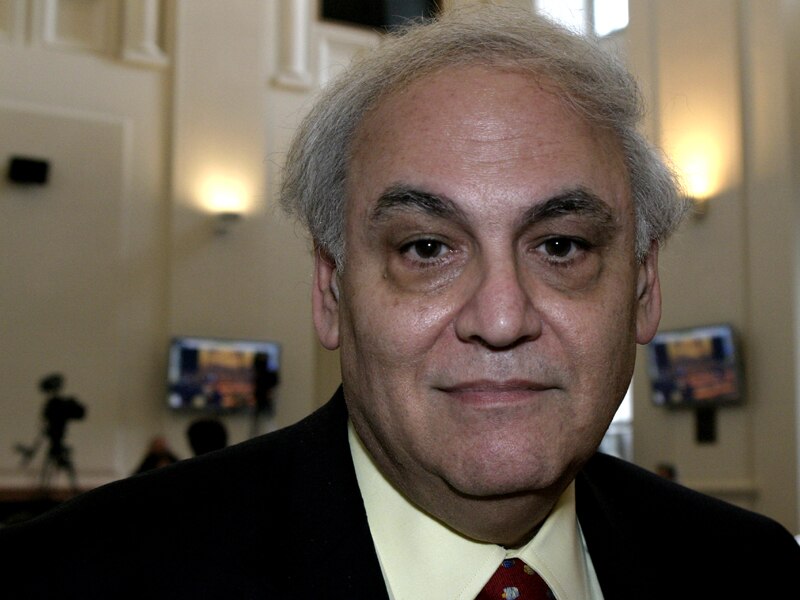
On Sept. 11, Pastor Lindsey Williams, former minister to the global oil companies during the building of the Alaskan pipeline, announced the most significant event to affect the U.S. dollar since its inception as a currency.
For the first time since the 1970's, when Henry Kissenger forged a
trade agreement with the Royal house of Saud to sell oil using only U.S.
dollars, China announced its intention to bypass the dollar for global oil customers and began selling the commodity using their own currency.
Ironically, since Sept. 6, the U.S. dollar has fallen from 81.467 on the index to today's price of 79.73. While analysts will focus on actions taking place in the Eurozone, and expected easing signals from the Federal Reserve on Thursday regarding the fall of the dollar, it is not coincidence that the dollar began to lose strength on the very day of China's announcement.
Since China is not a natural oil producing nation, the question most people will ask is how will the Asian economic power get enough oil to affect dollar hegemony? That question was also answered by Lindsey Williams when he pointed out a new trade agreement that was signed on Sept. 7 between China and Russia, in which the Russian Federation agreed to sell oil to China in any and all amounts they desired.
This new agreement between Russia and China also has serious ramifications in regards to Iran, and the rest of the Middle East. No longer will U.S. sanctions against Iran have a measurable affect, as the rogue nation can simply choose to sell its oil to China, and receive Yuan in return, and use that currency to trade for the necessary resources it needs to sustain its economy and nuclear programs.
The world changed last week, and there was nary a word spoken by Wall Street or by politicians who reveled in their own magnificence as this event took place during the party conventions. A major blow was done on Sept. 6 to the American empire, and to the power of the U.S. dollar as the world's reserve currency. And China, along with Russia, are now aiming to become the controllers of energy, and thus, controllers of a new petro-currency.
For more on finance and economics, you can follow Ken Schortgen Jr on Twitter, and listen to the weekly economic roundup segment of the Angel Clark radio show from 6-7p.m. est on Friday evenings.
Lindsey Williams: "The most significant day in the history of the American dollar, since its inception, happened on Thursday, Sept. 6. On that day, something took place that is going to affect your life, your family, your dinner table more than you can possibly imagine."This announcement by China is one of the most significant sea changes in the global economic and monetary systems, but was barely reported on due to its announcement taking place during the Democratic convention last week. The ramifications of this new action are vast, and could very well be the catalyst that brings down the dollar as the global reserve currency, and change the entire landscape of how the world purchases energy.
"On Thursday, Sept. 6... just a few days ago, China made the official announcement. China said on that day, our banking system is ready, all of our communication systems are ready, all of the transfer systems are ready, and as of that day, Thursday, Sept. 6, any nation in the world that wishes from this point on, to buy, sell, or trade crude oil, can do using the Chinese currency, not the American dollar. - Interview with Natty Bumpo on the Just Measures Radio network, Sept. 11
Ironically, since Sept. 6, the U.S. dollar has fallen from 81.467 on the index to today's price of 79.73. While analysts will focus on actions taking place in the Eurozone, and expected easing signals from the Federal Reserve on Thursday regarding the fall of the dollar, it is not coincidence that the dollar began to lose strength on the very day of China's announcement.
Since China is not a natural oil producing nation, the question most people will ask is how will the Asian economic power get enough oil to affect dollar hegemony? That question was also answered by Lindsey Williams when he pointed out a new trade agreement that was signed on Sept. 7 between China and Russia, in which the Russian Federation agreed to sell oil to China in any and all amounts they desired.
Lindsey Williams: "This has never happened in the history of crude oil. Since crude oil became the motivating force behind our (U.S.) entire economy, and everything in our lives revolves around crude oil. And since crude oil became the motivating factor behind our economy... never, ever has crude oil been sold, bought, traded, in any country in the world, without using the American dollar."These duo actions by the two most powerful adversaries of the U.S. economy and empire, have now joined in to make a move to attack the primary economic stronghold that keeps America as the most powerful economic superpower. Once the majority of the world begins to bypass the dollar, and purchase oil in other currencies, then the full weight of our debt and diminished manufacturing structure will come crashing down on the American people.
"Crude oil is the standard currency of the world. Not the Yen, not the Pound, not the Dollar. More money is transferred around the world in crude oil than in any other product.""On Friday, Sept. 7, Russia announced, that as of today, we will supply China with all of the crude oil that they need, no matter how much they want... there is no limit. And Russia will not sell or trade this crude oil to China using the American dollar." -Interview with Natty Bumpo on the Just Measures Radio network, Sept. 11
This new agreement between Russia and China also has serious ramifications in regards to Iran, and the rest of the Middle East. No longer will U.S. sanctions against Iran have a measurable affect, as the rogue nation can simply choose to sell its oil to China, and receive Yuan in return, and use that currency to trade for the necessary resources it needs to sustain its economy and nuclear programs.
The world changed last week, and there was nary a word spoken by Wall Street or by politicians who reveled in their own magnificence as this event took place during the party conventions. A major blow was done on Sept. 6 to the American empire, and to the power of the U.S. dollar as the world's reserve currency. And China, along with Russia, are now aiming to become the controllers of energy, and thus, controllers of a new petro-currency.
For more on finance and economics, you can follow Ken Schortgen Jr on Twitter, and listen to the weekly economic roundup segment of the Angel Clark radio show from 6-7p.m. est on Friday evenings.
Suggested by the author:
- Ron Paul: World will leave dollar unless we replace it with a gold backed one
- Near record gas prices foreshadow new economic crash
- Obama signs Executive Order to accelerate green energy polices in industry
- Soros sells equities and buys gold even as stock markets reach four year highs
- Ron Paul: Solution to money crisis is to allow competing currencies in econ